Tuesday, May 14, 2013

RNC chief: Obama must fire Attorney General Holder


Republican National Committee Chairman Reince Priebus pressed President Barack Obama on Tuesday to fire Attorney General Eric Holder. Priebus argued that the Justice Department had violated the First Amendment by scooping up phone records of Associate Press reporters and editors.
“Attorney General Eric Holder, in permitting the Justice Department to issue secret subpoenas to spy on Associated Press reporters, has trampled on the First Amendment and failed in his sworn duty to uphold the Constitution,” Priebus said in a statement emailed to reporters.
“Because Attorney General Holder has so egregiously violated the public trust, the president should ask for his immediate resignation,” Priebus said.
“If President Obama does not, the message will be unmistakable: The president of the United States believes his administration is above the Constitution and does not respect the role of a free press,” the RNC chief said.
Holder is due to testify before the House Judiciary Committee on Wednesday at a previously scheduled hearing.
It's not clear that the Justice Department broke any laws or violated the Constitution—though The Associated Press denounced the collection of phone records of its reporters without prior notice an unacceptable and unprecedented violation of freedom of the press as guaranteed by the First Amendment.
Civil liberties groups such as the ACLU have denounced the Justice Department's actions. The White House has referred questions about the burgeoning scandal to the Justice Department.
News Soruce: http://news.yahoo.com

Analysis: Controversies give Obama new governing headaches


WASHINGTON (Reuters) - President Barack Obama learned on Monday what can happen to presidents caught up in allegations of scandal: they have to address them instead of anything else.
It happened when the president had to interrupt his news conference with Prime Minister David Cameron of Britain to answer questions about the widening investigation into the Benghazi attacks in Libya and the Internal Revenue Service's targeting of Tea Party and other conservative groups.
By the end of the day he was facing a third major problem when the Associated Press said the Department of Justice had secretly seized some of its reporters' phone records last year.
It is all leading to comparisons with the second term of President Bill Clinton, in which his agenda was severely disrupted by the Monica Lewinsky scandal. Obama, unlike Clinton, has not been accused of personal misconduct. But his ability to steer the Washington "conversation" could be compromised.
"I think the IRS scandal comes at a very inopportune time for the president and the Democratic agenda," said Sarah Binder, a George Washington University scholar of Congress.
"The challenge for Obama and the Democrats in the coming weeks and months will be to keep the public's attention focused on Obama's policy goals when Republicans and the media will be focused on scandal."
The problems for Obama and Democrats may be worsened as well by the nature of the IRS behavior: targeting groups for extra scrutiny based on their political leanings reinforces the notion of big government pursuing citizens exercising constitutional rights.
It could feed into gun rights activists' worries about slippery slopes that lead to gun confiscation or gun-owner registries, said one Republican Senate aide, or fears of government "takeovers" of healthcare.
Ron Bonjean, a veteran Republican aide on Capitol Hill who is now a consultant, said even though the IRS is an independent agency, the White House can expect to be blamed by the public for any wrongdoing by it.
"The public sees the IRS as part of the federal government, which the White House controls," Bonjean said.
The same might be said of the news that broke Monday that the Justice Department secretly obtained two months of telephone records of reporters and editors for the Associated Press.
'WAY OFF MESSAGE'
The potential risk is high for Obama and the Democrats.
The Democratic-controlled Senate is considering a comprehensive bipartisan immigration bill that already faces a rough road in the Republican-controlled House, where suspicion of the Obama administration runs highest.
"The political fallout will be very damaging for the administration," said Bonjean.
"This will be another issue that takes the administration way off message," he said. "There's no way they can punch through with a positive agenda while investigations of the IRS are going on."
The IRS scandal could easily spill over into the 2014 mid-term election year.
A week ago, Obama was confronting a single investigative proceeding on Capitol Hill on the subject of the deadly attacks on the U.S. mission in Benghazi, Libya, last September.
It was attracting relatively little public attention outside conservative circles, and he could dismiss as partisan because only Republicans were pushing it.
On Monday he confronted the prospect of multiple probes, with those into the IRS backed by Obama's Democratic allies in Congress as Democrats moved quickly to show they were as concerned as Republicans about alleged IRS abuses.
On top of that, the AP is assessing options for legal action in response to the government's actions, said David Schulz, an attorney representing the AP.
White House spokesman Jay Carney said the White House was not involved in the decision to seize the AP records.
The administration's chief opponent in Congress of late -Representative Darrell Issa of California - threatened to add the AP issue to the list of things he is already probing, which include Benghazi and the IRS scandal.
Even without charges of personal misconduct, "staying coherent" in pursuit of an agenda is much more challenging for a president than it was in the Clinton years, said one of his former press secretaries, Mike McCurry.
"The environment for communications is so much more complicated now because you have this voracious social media environment in which everything is magnified," he said.
"We didn't have that. You could have congressional inquiries and scandals but you could calibrate a little bit and keep an agenda in play."
News Soruce: http://news.yahoo.com

Analysis: Syria's savagery will thwart reconciliation

BEIRUT (Reuters) - Syrian soldiers slowly stab a man to death, puncturing his back dozens of times. A rebel commander bites an organ ripped out of an enemy combatant. A young boy hacks the head off a prisoner. A soldier mutilates the genitals of a corpse.
These are the images of Syrian conflict, the first war in which the prevalence of camera phones and Internet access has allowed hundreds of gruesome war crimes to be broadcast, spreading hatred and fear. They are defining the war that is spilling across Syria's borders and making reconciliation an ever more distant prospect.
Brutality has been used as a tool since the revolt began two years ago, when videos emerged of government soldiers torturing pro-democracy protesters. In response to the crackdown, the opposition took up arms and now fighters from both sides are filming themselves committing atrocities.
Ghoulish footage of violence is not filmed surreptitiously, but with pride by the assailants who often speak to camera.
Rebel commander Abu Sakkar, known to journalists and revered by many rebels, was shown in a video on Sunday cutting organs out of a dead soldier, addressing the camera as he ripped the flesh: "I swear to God we will eat your hearts and your livers," he warned President Bashar al-Assad's forces as his men cheered.
Sakkar was a founding member of the Farouq Brigade, one of the main rebel units in Syria, but has since formed his own battalion as the opposition fragments. In the mosaic of hundreds of opposition groups, Sakkar's men are seen as neither secular nor hardline Islamists, but as some of the hardiest fighters.
Another picture posted online shows a rebel holding the severed head of a man, supposedly an Assad loyalist, over a barbecue as if to cook it. The fighter smiles and poses confidently, gripping a tuft of hair.
ZERO SUM GAME
Reinoud Leenders, an associate professor in the war studies department of King's College London, says that these brutal displays are used as a tool of war by both sides.
"It's the ultimate expression of disrespect and dehumanizing your opponent," he said.
In the face of an insurgency, he says, Assad's forces have used mass killings and torture to root out rebel fighters hiding among civilians.
"The regime has difficulty in pinning down opposition members, so they scare civilians from the area to get the rebels exposed. It looks irrational and emotional but there are rational reasons," he said.
Nadim Houry, a Syria and Lebanon researcher for Human Rights Watch, has documented abuses since the start of the revolt and says that he is seeing more and more brutal acts.
"Both parties are acting like they are facing an existential threat," he said. The opposition and the government see the war as a zero sum game, both fighting for survival, he says.
This fear of defeat silences condemnation from supporters of both sides, he says. The main Syrian opposition group condemned the video of a rebel commander taking a bite from the dead soldier but many opposition supporters dismissed the brutality.
On some opposition Facebook pages people celebrated the act. Others berated the media for highlighting one particular event, saying they should focus on indiscriminate killing of men, women and children by Assad's war planes and militia.
The Syrian government has never acknowledged brutality in army ranks, instead referring to people killed by soldiers as "terrorists" and areas captured by its forces as "cleansed".
Syria's war started as a popular uprising against the Assad dynasty, which has ruled for over four decades using secret police, intimidation and brute force.
But majority Sunni Muslims lead the revolt, while Assad gets his core support from his Alawite sect, an offshoot of Shi'ite Islam, leading to sectarian fighting and hatred.
International powers have taken sides, with the West and Gulf countries supporting the opposition, while Iran and Russia back Assad. While war crimes are condemned in words, there has been no real deterrent for the perpetrators, which Houry said has allowed atrocities to continue.
"What is particularly troubling is the silence of the international powers," Houry said. He referred to a recent army and loyalist militia attack in the coastal town of Banias in which at least 62 people, including babies, were killed.
"We have been seeing (these massacres) for over a year. What is shocking is the level of indifference. People shrug their shoulders and look away," said Houry.
Since Syria never signed up to the treaty establishing the International Criminal Court, the court could only investigate allegations of brutality there with a referral from the United Nations Security Council - something permanent members Russia and China have so far blocked.
RECONCILIATION
The United States and Russia have proposed a peace conference to try to end the war, but savagery from both sides means that the unlikely event of a peace agreement might not stop atrocities and fighting between increasingly disparate militias.
"The ideas of reconciliation are now unrealistic. The conflict is as much about the conflict itself than pro- or anti-regime," Leenders said. "I see a total mismatch between the US and Russian narrative and what is going on in Syria."
In its sectarian nature and big power inertia, the Syrian conflict has drawn comparisons with Bosnia, which was torn apart by Serbs, Croats and Muslims in a 1992-95 war that gave the world the term ‘ethnic cleansing' and was marked by some of the worst atrocities in Europe since World War Two.
Almost 17 years since that war ended, the wounds are still raw. Bodies are still being dug up and a cycle of blame and denial weighs on efforts to reconcile communities. Bitterness runs deep and spills into politics, stifling development.
Details of the worst atrocities are coming to light even now. Each side clings to its own narrative of the war.
In March, an ethnic Montenegrin man was jailed for 45 years for killing 31 people and raping at least 13, including a pregnant woman in front of her young child.
The judge in the case said the defendant, Veselin Vlahovic, nicknamed Batko, sometimes forced his victims to kiss his hand as he beat them, and once ordered a man to have sex with the corpse of a woman whose throat had been cut.
In Srebrenica, 8,000 Muslim men and boys were gunned down in five summer days in 1995, their bodies bulldozed into pits, buried and reburied in a bid to conceal the crime. Many Serbs still dispute the figures, despite mountains of testimony at the United Nations war crimes tribunal in The Hague.
The strength of feeling on all sides has made political compromise in the name of peace difficult, at times impossible, and acts as a brake on development.
In Lebanon, which lies next to Syria and fought its own 15-year civil war which ended in 1990, fault lines between religions remain strong and armed militias still come to blows as a weak government looks on helplessly.
Many Lebanese fighters accused of war crimes are now politicians as people support powerful members of their sect to safeguard against the influence of their foes.
"We don't have real reconciliation in Lebanon right now. Reconciliation requires justice," said rights researcher Houry, who lives in Beirut. "There is a tear at the fabric of Syria, similar to what we saw in Lebanon."
(Additional reporting by Mariam Karouny in Beirut, Matt Robinson in Belgrade and Thomas Escritt in The Hague; Editing by Giles Elgood)
News Soruce: http://news.yahoo.com

Chinese Creating New Auto Niche Within Detroit


DETROIT — Dozens of companies from China are putting down roots in Detroit, part of the country’s steady push into the American auto industry.
Chinese-owned companies are investing in American businesses and new vehicle technology, selling everything from seat belts to shock absorbers in retail stores, and hiring experienced engineers and designers in an effort to soak up the talent and expertise of domestic automakers and their suppliers.
While starting with batteries and auto parts, the spread of Chinese business is expected to result eventually in the sale of Chinese cars in the United States.
“The Chinese are well behind the Japanese when they hit our shores 30 years ago,” said David E. Cole, a founder of the Center for Automotive Research in Ann Arbor, Mich. “They lack the know-how, and they’re coming here to get it.”
As businesses sprout up with little fanfare, Chinese companies seem to be trying to avoid the type of public opposition experienced by the Japanese automakers Toyota and Honda in the 1980s, when the sudden influx of foreign cars competing head-on with cars from General Motors, Ford and Chrysler was perceived as a threat to American jobs.
In contrast to the Japanese, Chinese auto companies are assiduously avoiding the spotlight. Last year, the biggest carmaker in China, Shanghai Automotive Industries, opened new offices in suburban Detroit without any publicity, which is almost unheard-of in an industry that thrives on media coverage.
But China’s growth in the American auto industry is drawing notice in Washington. Last year, the Obama administration filed a complaint with the World Trade Organization that China’s government was unfairly subsidizing the production of some parts shipped to America. And the country’s inroads into American-made batteries and electric vehicles have drawn scrutiny because that sector of the industry has been heavily subsidized by the United States government.
The American industry’s overall resurgence has drawn a growing Chinese population to Detroit, with Chinese-owned suppliers bringing executives from their country and American automakers adding new talent. About 50,000 Chinese, many of them engineers and other professionals who work at General Motors and the Ford Motor Company, live in the metropolitan area.
Business networks are growing too. The Detroit Chinese Business Association boasts a flourishing membership, and counts about 100 Chinese-owned businesses, mostly auto-related, in the region.
The Ford Chinese Association, with 650 white-collar workers, predominantly from mainland China, has become one of the largest employee groups at the company. Its president, Raymond Xu, recalled that in 1999, when he came to Detroit to attend college, there were very few Chinese in the area.
“I think people are going to get more and more comfortable with it,” Mr. Xu said.
Typical of the Chinese expansion are the nondescript offices of Changan Automotive in an industrial park in the suburban city of Plymouth. Changan, a major carmaker in China, set up aresearch center to better understand the structural chassis of a vehicle — then hired about 20 Detroit engineers, some of whom had been laid off from Detroit’s auto companies, to staff the project.
“Most of the engineers are very young in China,” said Hong Su, the Changan executive heading the American facility. “They know how to make vehicles, but they don’t know how to develop them.”One of his employees is Alan Wall, 54, a former contract engineer at Chrysler who lost his job during the recession.
“It was an opportunity,” he said. “And those tend to come from a company that is trying to expand.”
Last year, China exported about $13 billion in automotive goods to the United States — tires, wheels and radios that are sold as replacement parts — according to AlixPartners, a consulting firm.
But many Chinese suppliers are pursuing direct business with the Detroit car companies, which now get many of their most common parts from low-wage nations like Mexico. One supplier, Brilliance Auto, an industrial giant with about 500,000 employees in the city of Shenyang in northeast China, is still an underdog in Detroit, trying to crack an intricate network of suppliers that have long relationships with G.M. and the other carmakers.
“We have been exporting our parts to North America for 15 years for the aftermarket,” said Dongbin Chen, a Brilliance executive, referring to retail sales of replacement parts. “Now our biggest opportunity is with G.M. and the other big companies.”
Brilliance scored a coup last year by supplying lightweight engine mounts for the new Cadillac ATS sedan made by G.M. in Lansing, Mich., which has whetted the company’s appetite for more.
At a United States-China conference held here in November, Brilliance displayed a large exhibit showcasing a range of mundane parts — including seat belts, steering wheels and shock absorbers — that it hopes to export to America.
“We have the ability and the capacity to supply these kinds of parts,” Mr. Chen said. “And I think right now, it is very important for us to be here.”
In addition to Chinese companies locating in Detroit, a cottage industry of lawyers, accountants and corporate advisers has grown up to assist them. Their numbers are small now, but the impact of the Chinese on the local economy is slowly expanding.
Industry analysts are hard-pressed to put a number on the Chinese suppliers operating in the United States. “We simply don’t know how many there are,” said David Andrea, an official with the Original Equipment Suppliers Association, a trade organization for auto parts makers.
In one of the more prominent deals, the Wanxiang Group bought most of the assets of the battery maker A123 Systems, which filed for bankruptcy last year despite receiving $132 million of $249 million in federal grants to build two factories in Michigan.
Congressional Republicans criticized the deal, saying A123’s technology could support military applications in China. Still, the buyout was approved this year by the Committee on Foreign Investment in the United States, a federal government panel.
Wanxiang, which has its United States headquarters near Chicago, has acquired several American auto parts and solar companies in recent years. But it attracted little attention until it took an interest in A123 Systems.
“I wasn’t surprised by the negative reaction,” said Pin Ni, president of the company’s American unit. “The reality is we grow here like a small seed into a bigger tree, and we cannot avoid this type of response.”
He said that Wanxiang employed several thousand American workers, and kept local management in place at companies it had bought. “We act, talk and walk like an American company,” Mr. Ni said. “In the end, it’s all about making money.”
Other Chinese companies are averse to publicity. Shanghai Auto is the largest carmaker in China and has major joint ventures there with G.M. and the German automaker Volkswagen. But when the company opened its new Detroit-area offices last year, even G.M. was surprised.
“Since we do not do business with SAIC in the U.S., there is no connection between G.M. and the SAIC office in the U.S.,” said Dayna Hart, a G.M. spokeswoman.
The arms-length reaction underscores the sensitivity surrounding China’s presence in the American industry. Only about 4 percent of Chinese-made light vehicles are exported now, mostly to countries in Africa and the Middle East. But the Detroit automakers are bracing for the day when competitive Chinese cars hit the American market.
“The Chinese have a lot of money and they are moving fast,” said Mr. Cole. “We’re going to see a lot more of them here.”
The growth in the Chinese professional class has had a ripple effect on the broader community, as well, with Chinese community groups sponsoring youth soccer leagues, basketball tournaments and musical performances at Detroit Tigers games. One organization runs a Chinese soup kitchen every year at a local homeless shelter.
Frank Chiu was an engineer for an auto supply company when he saw the growing number of Chinese professionals entering the industry and saw an opportunity. He left his job to open a Chinese grocery store in Canton, Mich, a bedroom community not far from Ford headquarters.
“The timing was very good for this type of business,” said Mr. Chiu, whose store features Chinese delicacies like chicken feet, snow fungus and pork uterus.
As customers roamed the store around him, Mr. Chiu reflected on how much had changed since he moved from Taiwan more than 20 years ago. “What was it like then?” he said. “Lonely is the first word that comes to mind.”
At Ford, Chinese employees play an integral part in the company’s expansion in China, where it is building several new factories. They also help prepare American executives for transfers to China, and play host to Chinese car dealers when they visit Ford’s headquarters.
On Feb. 14, hundreds of Ford employees celebrated the Chinese New Year at the stately Dearborn Inn, which was conceived by Henry Ford in the 1930s as a replica of an early American village, with guest cottages that copied the homes of historical figures like Walt Whitman and Patrick Henry.
“We definitely see more openness to the Chinese culture,” said Mr. Xu, the Ford Chinese Association president. “We started small here, but we are coming on strong.”

Study: Plants communicate with each other via underground fungi


A new study has demonstrated that plants can use an underground network of fungi to warn each other about incoming insect attacks.
Carried out by researchers from the University of Aberdeen, the James Hutton Institute and Rothamsted Research, the study demonstrated that the plants are able to send warnings of incoming aphids to other plants connected to their network. The plants then send out a chemical signal that repels aphids and attracts wasps, a natural aphid predator.
The research follows previous findings that have shown plants can communicate similar chemical warnings through the air.
The new study says plants can connect with other via a common fungus known as mycorrhizae. "Mycorrhizal fungi need to get [products of photosynthesis] from the plant, and they have to do something for the plant," John Pickett of Rothamsted Research told the BBC.
"In the past, we thought of them making nutrients available from the [roots and soil], but now we see another evolutionary role for them in which they pay the plant back by transmitting the signal efficiently," he said.
University of Aberdeen’s David Johnson added, "Our understanding of ecological systems has not considered the fact that plants are interconnected in this way. It could have major implications for our understanding of how one organism affects another."
Conversely, the plants in the study not connected to the fungal network did not send out warning signals to other plants after coming under attack. The in-network plants were also covered with bags to ensure that they were not actually sending the signals through the air.
Pickett said the discovery could lead to farms using the fungi as an advance warning system for their crops. In theory, one “sacrificial” plant would be kept at a distance from the crops. If it fell under attack from insects, it would warn the rest of the plants, giving them time to mount a viable defense.
News Soruce: http://news.yahoo.com

Richard Branson Loses a Bet, Dresses Like a Lady


On Sunday, Virgin Group founder Sir Richard Branson dressed up as a female flight attendant, rocking a bright red pencil skirt and blazer, fishnet stockings, red patent leather flats and a face full of makeup, including false eyelashes and a bold red lip. The female ensemble was the hilarious result of a lost bet to Tony Fernandes, Air-Asia's group chief, over whose Formula One racing team would win the 2010 Abu Dhabi race.
The billionaire made good on the bet, chatting with passengers, making announcements over the intercom, and even serving drinks, all the while in drag for the six-hour flight from Australia to Malaysia. Richard Branson may be a super-unattractive woman, but we have to say, we love a man of his word!
And Richard had some fun of his own, getting back at his betting mate, Tony. Check out the vid to hear how he got even!
News Soruce: http://omg.yahoo.com

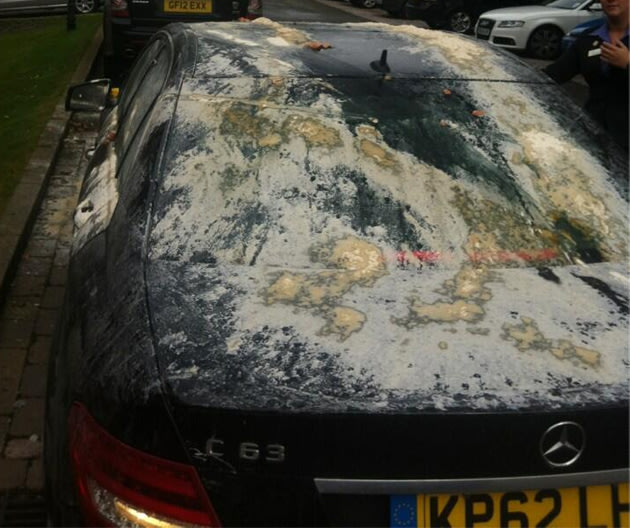
Stoke players ‘decorate’ Michael Owen’s Mercedes with eggs and flour as retirement present


This weekend has had so many well-publicized retirements and goodbyes (FergusonScholesVan BommelMoyesMancini's Premiership career!) that Michael Owen's final home game of his career almost slipped under the radar. Particularly as the former England star spent that match — a 2-1 loss to Tottenham — as an unused substitute for the fourteenth time this season.
Before the 33-year-old striker moves on to bore the living daylights out of BT Sport subscribers, his Stoke teammates let him know they remembered he was a club employee by vandalzing his Mercedes AMG C63, giving him the ideal opportunity to employ the sorely underused #eggs&flour hashtag...
Owen donned his detective hat — being careful not to pick up an injury in the process — and produced a list of suspects he had rounded down to Dean Whitehead, Glenn Whelan and Robert HuthHe then added Jonathan Walters, Peter Crouch and Matthew Ethrington to the list. So, basically just anyone who might have access to flour and eggs.

Saudi man traveling with pressure cooker arrested


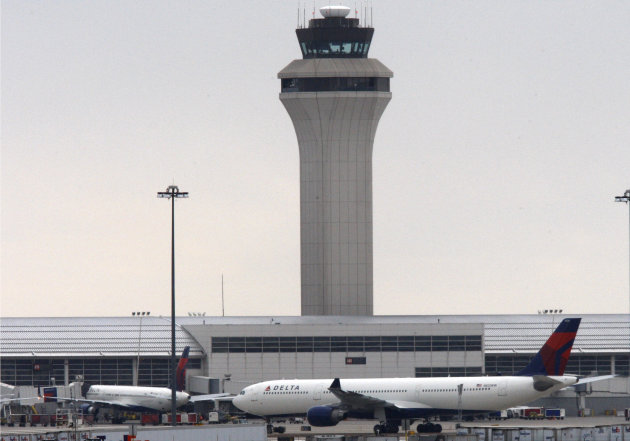
DETROIT (AP) — A Saudi man was arrested at Detroit Metropolitan Airport after federal agents said he lied about why he was traveling with a pressure cooker, but his nephew said Monday that it was all a misunderstanding about a device he simply wanted for cooking.
Two pressure cookers were used in last month's Boston Marathon bombings.
Hussain Al Khawahir was being held in Detroit on allegations of lying to Customs and Border Protection agents and of using a passport with a missing page. He was arrested Saturday.
His nephew, Nasser Almarzooq, told The Associated Press that he had asked his uncle to bring him the pressure cooker so he could make lamb. The college student said two pressure cookers he bought in the U.S. were "not good at all," and said the ones available in Saudi Arabia are higher quality.
"I'm Arabic," said Almarzooq, who is studying mechanical engineering at the University of Toledo in Ohio, about 55 miles south of Detroit. "I always use pressure cookers to cook."
Almarzooq said his uncle was coming to visit him for a couple weeks.
A criminal complaint alleges that Al Khawahir arrived at the airport Saturday on a flight from Saudi Arabia via Amsterdam, and that he told agents he was visiting his nephew.
He originally said he brought the pressure cooker with him because pressure cookers aren't sold in America, then later said his nephew had bought one but it "was cheap" and broke after one use, according to the complaint.
Agents said they also noticed a page was missing from Al Khawahir's passport from Saudi Arabia. He told them he didn't how it had been removed, and said the document had been locked in a box that only he, his wife and three children have access to in his home, according to the complaint.
Al Khawahir was read his Miranda rights, which he said he understood, and he invoked his right to remain silent, according to the complaint.
Gina Balaya, spokeswoman for the U.S. attorney's office in Detroit, said Al Khawahir made his initial court appearance Sunday, but his Monday detention hearing was delayed until Tuesday afternoon. A message seeking comment was left with his defense attorney.
Authorities have said that in the Boston Marathon bombing, brothers Tamerlan and Dzhokhar Tsarnaev set off two shrapnel-packed pressure-cooker bombs April 15 near the race finish line. The attack killed three people and injured more than 260 others.
On Monday, Almarzooq said he was concerned about his uncle and hadn't been told anything since his uncle was arrested Saturday. He also vehemently denied any wrongdoing.
"If I wanted to do something stupid like this, should I just take my uncle from Saudi Arabia to buy me a pressure cooker?" he said. "It's legal here."
News Soruce: http://news.yahoo.com

Lamborghini Egoista one-off crashes Lambo’s 50th birthday


an a 50th birthday spawn a midlife crisis in an automaker? At its own 50th anniversary party in Italy on Saturday, Lamborghini unveiled this surprise, a one-off car from designer Walter De Silva. Inspired by the look of Apache attack helicopters, powered by a 600-hp V-10, Lamborghini gave the one-seater the inspiring name "Egoista," and what better way to recapture lost youth than by crafting a supercar with the unchecked passion of a teen-ager.
I don't think there's a way to understand what in the name of Saint Agatha Lamborghini was aiming for without these quotes from chief designer Walter De Silva:
I am very attached to this Italian brand, being an Italian myself. I wanted to pay homage to and think up a vehicle to underline the fact that Lamborghinis have always been made with passion, and with the heart more than the head...
This is a car made for one person only, to allow them to have fun and express their personality to the maximum. It is designed purely for hyper-sophisticated people who want only the most extreme and special things in the world. It represents hedonism taken to the extreme, it is a car without compromises, in a word: egoista (or selfish).
 De Silva says the Egoista was designed expressly to violate the rules that limit road-going cars; it's front end looks as if it could julienne a pedestrian, and there's nary a five-mph bumper to be found. The stealth-fighter exterior sells its aeronautical wishes with such earnestness that it comes with "no step" warnings and a cockpit that in theory could be designed with an ejection system. In place of traditional headlamps, Lamborghini fitted LED warning lights buried in the recesses of the three-pod design.
The orange-tinted cockpit has a bare minimum of instruments, with most gauges replaced by a heads-up display. The cockpit canopy slides forward for entry and exit, which according to Lamborghini requires the following steps: "To get out of the vehicle, the driver must remove the steering wheel and rest it on the dashboard, open the dome with an electronic command, stand up in their seat, sit down on a precise point of the left-hand bodywork, then swivel their legs 180 degrees from the inside of the cockpit to the outside of the vehicle. At this point they can set their feet down and stand up." This will, per the automaker, make the driver feel like Tom Cruise in "Top Gun," although there's also the chance of a comparison to Jan-Michael Vincent's "Airwolf" days.
Or it won't, because Lamborghini makes clear it will never build or sell the Egoista. Even for a company with the coglioni to build three copies of Veneno and charge $1.3 million apiece, this comes off as an executive bauble, a tribute of management's own hothouse brillance rather than the beautiful machines Lamborghini has built over the past five decades. No concept car name has ever been quite so apt.
News Soruce: http://autos.yahoo.com

UK housing demand highest since late 2009, prices rise - RICS


LONDON (Reuters) - Demand for housing in Britain rose to its highest level in nearly 3-1/2 years in April, helped by a new government scheme to boost the sector, and a measure of prices notched its first gain since mid-2010, a monthly survey showed on Tuesday.
The Royal Institution of Chartered Surveyors (RICS) said 25 percent more chartered surveyors reported new buyer enquiries rose rather than fell last month, up from an increase of 13 percent in March.
The rise suggested that the new Help to Buy programme was stoking interest in home-buying even if a key component of the programme - government guarantees for risky mortgages - is only due to come into effect next year, RICS said.
The RICS said its seasonally adjusted house price balance rose for the first time since June 2010, albeit only marginally at +1, as the number of homeowners putting their homes on the market rose less quickly than demand.
Economists had expected a price reading of +2.
Peter Bolton King, RICS global residential director, said it was encouraging that Help to Buy, along with other measures to spur lending, was helping the market and that sales would probably pick up in coming months, albeit from low levels.
"However there are some understandable concerns that the measures will also lead to higher prices. In view of this, it is critical that developers are as good as their word and speed up the delivery of new stock," he said.
Other measures of the British housing market have seen an increase in prices recently. Lender Halifax said last week that prices increased 1.1 percent in April from March, the strongest growth since November.
Chancellor George Osborne announced the Help to Buy programme in March as the government's latest programme to support the housing sector.
Under the plan, the government committed 3.5 billion pounds over the next three years to shared equity loans for new-build homes, allowing buyers to purchase them with a 5 percent deposit. It will also guarantee 130 billion pounds of mortgages from 2014 for three years, allowing banks to provide more loans to people without big deposits.
Critics have said the plan risked pushing up house prices without spurring more construction.
News Soruce: http://news.yahoo.com

Angel or Devil? Taylor Swift Shows Off Dueling Looks During Show


Everyone knows that America's sweetheart, Taylor Swift, can play the good-girl role to a tee. But who knew she could also rock a startlingly grown-up, almost naughty side as well? The singer showed off both of these dueling devil-angel styles during her Sunday night show in Washington D.C.
"Bad" Taylor took the stage dressed in an outfit quite divergent from her usual floaty, ethereal costumes--a black bra-style top and satin hotpants, accessorized with knee-high boots and wildly tousled hair. Appropriately, a troupe of masked male dancers fell at her feet.
Those who prefer "good" Taylor needn't worry. She made an appearance as well; choosing a beautiful white gown, bare feet (reminiscent of her stripped-down "Safe And Sound" video)--and a handsome Prince Charming-style escort.
Despite her occasional flirtations with sultry looks, Swift actually is one of very few successful young starlets who has been able to maintain a solidly wholesome vibe throughout her career. Unlike Christina Aguilera, Britney Spears, and even her own pal Selena Gomez, Swift's overriding image has remained kid-tested and mother-approved over the years.
Swift will be busy all through the rest of the year on her Red tour. She wraps the North American leg September 21 in Nashville, and has just added Australia and New Zealand to her schedule. You can find out when she's coming to your city by checking here.
News Soruce: http://music.yahoo.com

4-Year-Old Is Elected Mayor


Being a politician is no easy gig—just ask 4-year-old Dorset, Minnesota mayor Robert "Bobby" Tufts. 


Although the story only made national headlines on Friday after a local news teamcovered a fishing event near Dorset and discovered the pint-size politician, for Bobby, who was elected last August, it's just business as usual. He was named mayor at the town’s “Taste of Dorset” festival after would-be candidates who live in and around Dorset paid the $1 ballot charge to throw their names into a hat. The seasonal town, which boasts only 26 residents and 14 businesses, elects a new mayor every year from a pool of campaigning candidates who in the past have included chickens and cats. 

According to Bobby’s mom, 34-year-old Emma Tufts, the toddler ran a two-month campaign starting in late June 2012, visiting local restaurants and handing out pins with his photo imprinted that read, “Vote for Bobby!” In August, his name was picked out of a hat. “He was so excited and told everyone at daycare that he was going to be mayor forever,” Tufts told Yahoo! Shine. 


As a prize, Bobby received a gift certificate from every business in town and an oak plaque that represented a key to the city. “He wears the title proudly and right now, I don't mind the attention he is getting, it's sort of fun,” says Tufts. “The other day, he was signing autographs."

When Bobby’s not fishing, rock climbing, snow shoeing, or hanging out with his girlfriend Sophia, he can be spotted at the local restaurants, especially local soda fountain where he orders chocolate ice cream. “He’s pretty precocious and gets a lot of attention when he goes out,” local resident Sally Wizik Wills, 64, owner of Sister Wolf Books told Yahoo! Shine. “He’s a good ambassador for Dorset.”

Will Bobby take a cue from “Parks and Recreation” former teenage mayor Ben Wyatt and continue his career in politics when his gig ends in August? “We’re not sure,” says Tufts. “I’d like to give his 15-month-old brother a chance to run, but Bobby may be a politician. He’s very opinionated and very charming.” 

News Soruce: http://shine.yahoo.com

The eight cities where residents feel least safe


Do you feel safe walking alone at night?
That's what Gallup recently asked people who live in America's 50 biggest metro areas.
Perhaps surprisingly, residents of the biggest metro areas feel scarcely less secure than the national average: 71 percent of big-city residents and their suburban neighbors, vs. 72 percent for the nation as a whole.
The variation was wide -- a 25-percentage-point difference -- between the least and most secure-feeling city dwellers.
Certainly there's a strong correlation between the FBI violent crime rate and how residents actually feel, Gallup says. In the Memphis area, the smallest proportion of residents feel safe walking alone at night out of the 50 big metro areas surveyed -- and indeed, Memphis is one of the most dangerous cities in America, according to a report published on Yahoo! Homes last year.
Yet residents of some of the most notoriously dangerous metro areas, like Detroit and St. Louis,aren't especially nervous about walking alone at night. In fact, nearly three-quarters of St. Louis-area residents feel safe doing so, which puts that metro in the top 15 of the safest-feeling cities. By contrast, people in the Silicon Valley, Dallas and San Diego areas are considerably warier.
The most secure of all big-metro dwellers live in the Twin Cities: An impressive 80 percent of Minneapolis-area residents feel safe walking at night -- though we suppose maybe Gallup should have asked them about bicycling instead. Bike riders on the city's Midtown Greenway have recently reported a spate of attacks, including one Molotov cocktail hurled at a cyclist, according to the Atlantic Cities.
And as far as the old song goes: Maybe it's true that nobody walks in L.A. -- but more than two-thirds say that if they did, they'd feel perfectly comfortable walkin' in L.A. at night.
Below are the eight metro areas where residents feel least safe walking at night. (We stopped at eight cities instead of a round 10 because of a seven-way tie for ninth place.)

Gallup asked: "Do you feel safe walking alone at night in the city or area where you live?"
No. 1 (least likely to feel safe): Memphis, TN-MS-AR
43% say no, they don't feel safe
55% say yes, they feel safe

41% say no, they don't feel safe
59% say yes, they feel safe

38% say no, they don't feel safe
61% say yes, they feel safe

No. 4 (tie): Houston-Sugar Land-Baytown, TX
36% say no, they don't feel safe
63% say yes, they feel safe
(Interesting side note: Late last summer, Forbes named Houston "America's hippest city.")

No. 4 (tie): Jacksonville, FL
36% say no, they don't feel safe
63% say yes, they feel safe

No. 6: Las Vegas-Paradise, NV
34% say no, they don't feel safe
65% say yes, they feel safe

32% say no, they don't feel safe
66% say yes, they feel safe

No. 7 (tie): Baltimore-Towson, MD
32% say no, they don't feel safe
66% say yes, they feel safe

News Soruce: http://homes.yahoo.com